

Tim Cresswell,
CEO, TCI
Why public-sector leaders should look inside their existing buildings before committing their next capital dollar.
By Tim Cresswell, CEO TCI
Public-sector buildings are under increasing pressure to do more with less. Hospitals, schools, colleges, universities and municipal facilities must maintain safe, healthy indoor environments while managing aging infrastructure, escalating operating costs, constrained capital budgets and ambitious greenhouse gas (GHG) reduction targets.
The conversation about net zero often begins with major capital investments: electrification, heat pumps, renewable energy systems, building envelope upgrades and equipment replacement.
These investments have an important role to play. But there is a question that deserves attention before organizations commit millions of dollars to new infrastructure:
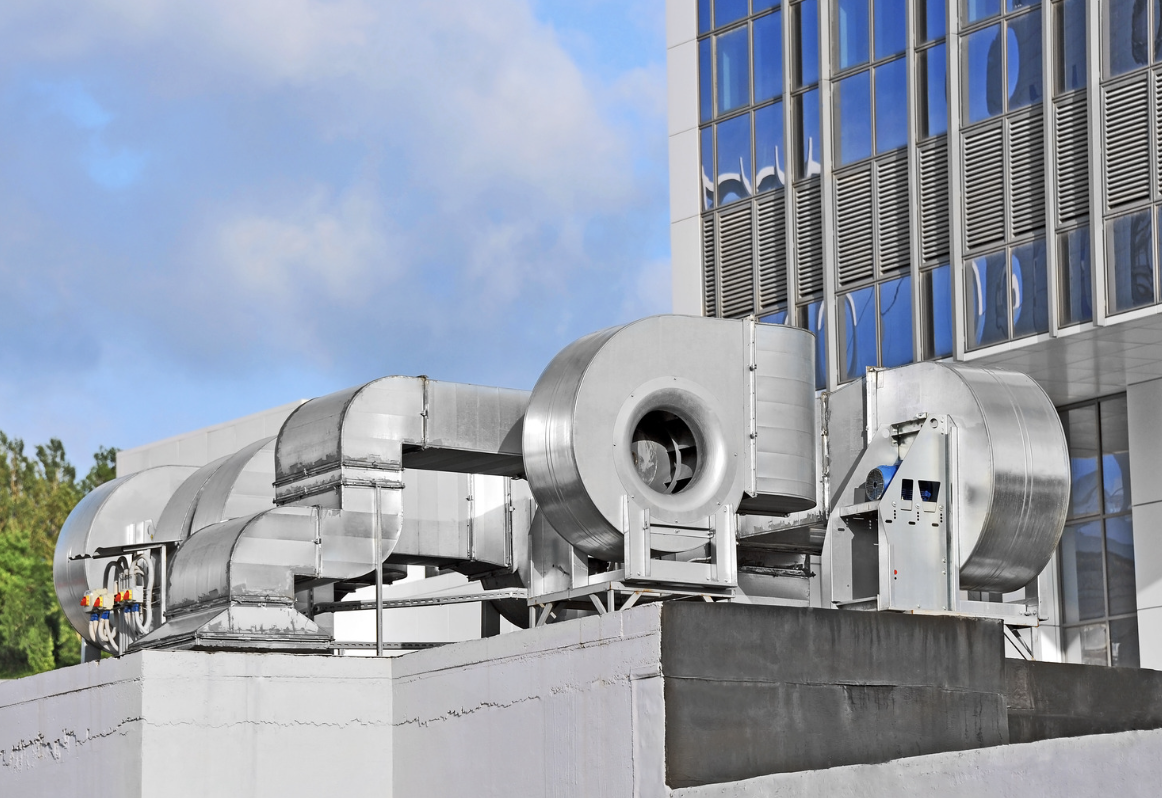
How much energy is being wasted by the ventilation systems already operating in our buildings?
For many facilities, understanding and addressing ventilation air loss may represent one of the most practical starting points for reducing emissions and improving financial performance.
And the opportunity goes beyond the initial energy savings.
By reducing unnecessary ventilation energy consumption, organizations may be able to recover operating dollars that can help fund the next stage of their decarbonization journey.

The Hidden Cost of Moving Air
Ventilation is essential to building health, safety and performance.
Air-handling systems deliver outdoor air, distribute conditioned air throughout occupied spaces and support indoor air quality. In hospitals and other specialized facilities, ventilation also plays a critical role in infection control, pressure relationships and environmental safety.
However, the energy required to move, heat, cool and condition air can represent a significant portion of a building's operating costs.
In many existing buildings, ventilation systems continue operating according to assumptions established years or even decades ago.
Building occupancy may have changed. Space utilization may have evolved. Mechanical systems may have been modified. Yet air-handling equipment can continue operating at airflow rates and schedules that have not been reassessed against current requirements.
The result can be a substantial amount of unnecessary energy consumption.
This is where ventilation air loss becomes important.
In this context, ventilation air loss refers to the energy and operating costs associated with delivering, moving or conditioning more air than is necessary to meet applicable ventilation requirements and actual building needs.
It is not simply a matter of air escaping through leaks. It can also involve excessive airflow, inefficient distribution, inappropriate operating schedules and systems that have not been properly balanced or optimized.
Every unnecessary cubic foot of air moved through a building has a potential energy cost.
That cost can extend across fan motors, heating systems, cooling equipment and associated mechanical infrastructure.

Why Ventilation Optimization Matters for Net Zero
Reducing greenhouse gas emissions requires organizations to address the energy consumed by their existing assets.
Ventilation optimization can contribute in several ways.
First, reducing unnecessary airflow can lower fan energy consumption. Because fan power is highly sensitive to changes in airflow under suitable operating conditions, even relatively modest reductions in fan speed can create meaningful electricity savings.
Second, reducing excess outdoor-air intake, where permitted by applicable codes and operating requirements, can decrease the energy needed to heat and cool incoming air.
Third, lowering unnecessary heating and cooling demand can reduce the workload on boilers, chillers and other central plant equipment.
These improvements can translate into lower utility costs and reduced emissions, depending on the building's energy sources, system configuration and operating profile.
The key is to optimize ventilation without compromising indoor air quality, occupant comfort, infection prevention requirements or applicable ventilation codes.
The objective is not to provide less ventilation than a building needs.
It is to stop paying for ventilation energy that delivers no additional required benefit.

The Financial Opportunity Hiding in Plain Sight
For public-sector executives, the business case for ventilation optimization extends beyond energy conservation.
Every dollar spent unnecessarily on building operations is a dollar unavailable for other organizational priorities.
In a hospital, those resources could support infrastructure renewal or essential services. In a school board, they could contribute to improving learning environments. At a college or university, they could help address deferred maintenance and facility modernization.
This creates an important connection between operational efficiency and capital planning.
Energy waste is not only an environmental liability. It is also a potential source of recoverable financial capacity.
When ventilation optimization produces verified and sustained operating savings, those savings may improve an organization's ability to finance additional building improvements.
Depending on the project and available funding mechanisms, utility incentives and other programs may further strengthen the financial case.
For CFOs and senior executives, this changes the conversation.
Rather than treating emissions reduction exclusively as a capital expenditure, organizations can begin identifying operational improvements that help support subsequent investment.
The question becomes:
What if part of the funding for tomorrow's building improvements is already being spent unnecessarily today?

Start With the Infrastructure You Already Own
One of the challenges facing public-sector organizations is the scale of their building portfolios.
A school board may operate dozens or hundreds of facilities. A university may have multiple generations of buildings, each with different mechanical systems. Hospitals often operate complex ventilation infrastructure with demanding performance requirements.
Attempting to modernize everything simultaneously can be financially and operationally unrealistic.
A more practical approach begins with a detailed understanding of existing air-handling infrastructure.
This includes evaluating actual airflow, equipment operation, motor speeds, control sequences, ventilation requirements and opportunities for system balancing.
The process should identify where energy consumption can be reduced safely and where existing equipment can operate more efficiently.
Rather than relying solely on theoretical savings, organizations can use a measured pilot project to establish a performance baseline, implement appropriate changes and verify results.
A phased approach can follow a logical progression:
Assess: Identify suitable air-handling systems and establish current operating conditions.
Diagnose: Measure airflow, evaluate controls and determine code-compliant optimization opportunities.
Pilot: Implement improvements in a controlled area or system and verify performance.
Validate: Confirm energy savings, ventilation compliance and operational outcomes.
Scale: Expand successful measures across additional systems or facilities where the business case is supported.
This approach helps facilities leaders and executives make decisions based on measured evidence rather than assumptions.
It also creates a clearer path for evaluating financial returns, implementation risks and future investment opportunities.
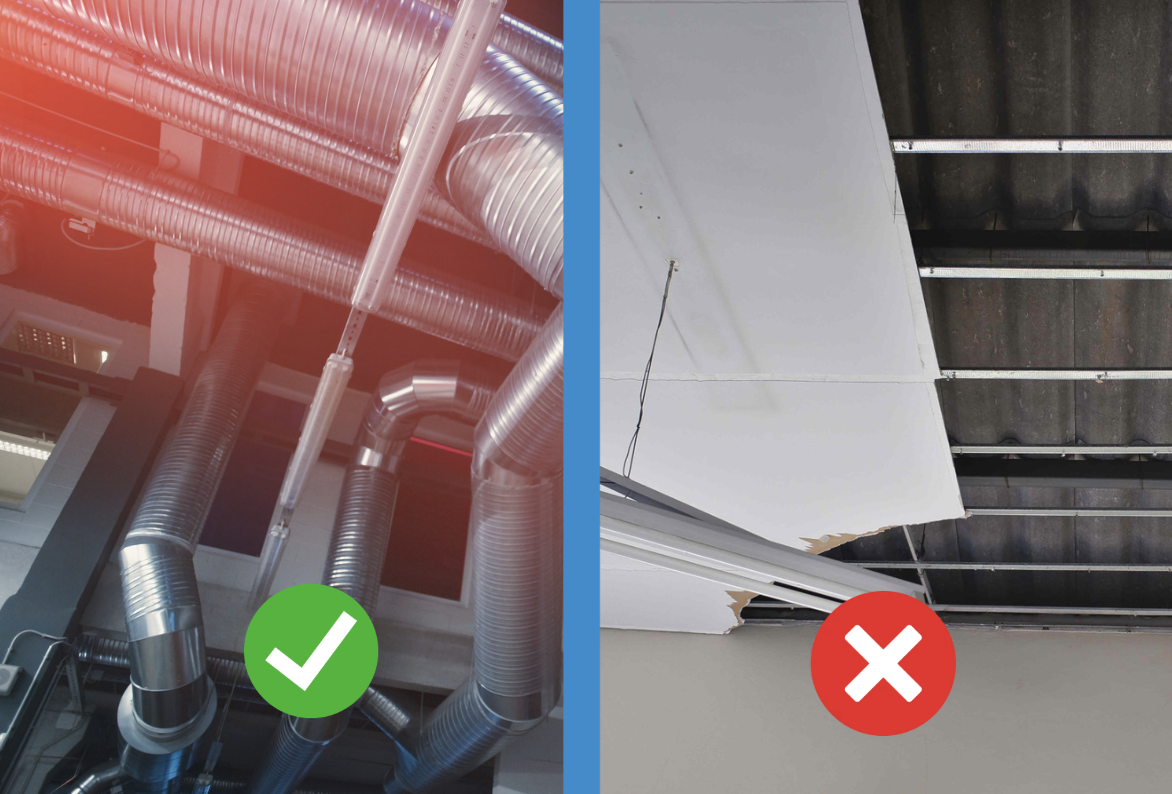
Ventilation Optimization Before Equipment Replacement
Decarbonization strategies frequently include replacing fossil-fuel-based heating equipment with electric alternatives.
But the size and cost of those future systems depend partly on the heating and cooling loads they must serve.
If a building is conditioning unnecessary volumes of air, its mechanical systems may be working harder than required.
Addressing excess ventilation demand before major equipment replacement can help organizations better understand their true operating loads.
In suitable circumstances, this may support more efficient equipment selection, improved system performance and reduced future capital requirements.
This does not eliminate the need for electrification or other major infrastructure investments.
It can make those investments more informed.
Optimize the demand first. Then invest in the infrastructure required to serve it.
For organizations developing long-term net-zero roadmaps, this sequencing deserves serious consideration.

A Shared Priority for Facilities and the C-Suite
Ventilation optimization sits at the intersection of engineering, finance and sustainability.
For facilities professionals, the priorities include system performance, code compliance, reliability and occupant safety.
For sustainability leaders, the focus is on measurable reductions in energy consumption and GHG emissions.
For CFOs, the relevant considerations include avoided operating costs, verified savings, payback periods, available incentives and capital allocation.
For CEOs and senior leadership teams, the broader opportunity is to improve financial resilience while making progress toward environmental commitments.
Successful projects require these perspectives to work together.
A technically feasible project is not necessarily financially attractive. A compelling financial model is insufficient if ventilation requirements cannot be maintained. And projected emissions reductions must be supported by credible measurement and verification.
The strongest opportunities satisfy all three tests: engineering integrity, financial value and measurable environmental performance.

From Energy Waste to Emission Reductions
Net zero will require significant investment in public-sector infrastructure.
But not every meaningful step must begin with a major construction project or equipment replacement.
Some of the most valuable opportunities may already exist within the buildings organizations own and operate.
Ventilation air loss is one such opportunity.
By examining how air is delivered, distributed and conditioned, public-sector organizations can identify unnecessary energy consumption, improve operating efficiency and potentially unlock financial resources for additional emissions-reduction initiatives.
The broader lesson is straightforward.
Before investing in more energy infrastructure, make sure existing buildings are not consuming more energy than they need.
For public-sector leaders facing the combined pressures of fiscal responsibility, aging facilities and climate commitments, ventilation optimization offers a practical place to begin.
It may also provide something even more valuable: a financially sustainable pathway from the first efficiency improvement to the next generation of emission reductions.
Optimize ventilation. Start saving. Reinvest in a lower-carbon future.