WCDSB takes a Collaborative Approach to Reducing Carbon Emissions
The Key Ingredients of Success at WCDSB

For the Waterloo Catholic District School Board (WCDSB), achieving industry-leading carbon emissions reduction is not the result of a single silver-bullet technology, but rather a strategic combination of internal staff expertise, innovative financial stewardship, and deep organizational collaboration. Operating within provincial ministry capital funding frameworks, WCDSB relies on skilled internal staff to identify operational energy waste, navigate complex utility incentive structures—such as Enbridge's Pay for Performance program and Save on Energy rebates—and channel captured savings into a self-sustaining Green Revolving Fund. This internal capital engine finances continuous efficiency retrofits, enabling the board to meet and exceed its 1.5% annual weather-normalized energy intensity reduction target. Crucially, this technical progress is sustained by a culture of cross-departmental teamwork that connects executive leadership, facilities managers, building operators, custodians, and educators to balance Ontario's highest classroom comfort standards with aggressive decarbonization goals. Paired with external partnerships alongside community organizations like Sustainable Waterloo Region and REEP Green Solutions, WCDSB demonstrates how institutional expertise and shared ownership can turn fiscal constraints into lasting environmental stewardship.
Executive Profile: The Visionary Behind the "Two Hats" Approach

Zeb Foss
Manager of Energy Conservation and Sustainability, WCDSB
The complexity of modern energy markets requires institutional leaders who are "bilingual"—capable of navigating utility economics while understanding the nuances of classroom environments. Zeb Foss, Manager of Energy Conservation and Sustainability at WCDSB, embodies this dual expertise. Bringing a six-year tenure from Alectra Utilities, where he managed "Save on Energy" conservation programs, Foss possesses an insider’s understanding of incentive structures. This background allows the board to leverage utility programs to fund critical infrastructure that might otherwise be stalled by budgetary constraints.
Foss executes his role through a "Two Hats" philosophy. The first hat focuses on technical energy conservation: managing Building Automation Systems (BAS), HVAC efficiency, and load displacement. The second is a sustainability hat centered on pedagogical impact and behavioral change—overseeing EcoSchools participation, tree planting, and micro forest development. This approach ensures that every technical retrofit (Hat 1) becomes a "teachable moment" (Hat 2) for the school community. This vision is shared by collaborators like the Region of Waterloo, who partner with the board to amplify these success stories, moving the needle from passive compliance to proactive regional leadership.
Reaping Energy Savings & The Self-Sustaining Green Revolving Fund
Rather than treating energy efficiency as only a series of isolated capital expenditures, WCDSB utilizes a self-funding framework powered by its Green Revolving Fund. Staff expertise is directed toward identifying operational inefficiencies and harvesting high-return "low-hanging fruit" across the board’s 60+ facility footprint:
Building Automation System (BAS) Commissioning & Scheduling: Upgrading legacy systems enables precise remote scheduling around school hours and community evening/weekend use, eliminating off-hour heating and cooling waste.
Real-Time Energy & Water Sub-Metering: Pulse gas monitoring and real-time water telemetry detect baseline drift and hidden leaks instantly, preventing costly utility waste before it compounds.
Accelerated LED Retrofits: Transitioning facilities to high-efficiency LED lighting drastically reduces electrical demand and long-term maintenance costs.
The financial returns from these operational reductions, combined with lump-sum rebate checks from utility incentives, are systematically reinvested directly into the Green Revolving Fund.

The WCDSB’s Green Revolving Fund is a self-sustaining financial mechanism designed to continuously support environmental initiatives across the Board. It works by capturing financial rebates and incentives from regional and utility programs and reinvesting that revenue directly into new sustainability projects. This approach provides the Board with a dedicated, renewable funding stream, enabling ongoing facility modernization, energy efficiency improvements, and various sustainability efforts independent of standard provincial capital funding cycles.
This internal fund acts as a dedicated capital engine, financing subsequent carbon emissions-reduction initiatives—such as structural load assessments for on-site rooftop solar PV arrays—without drawing on restricted core educational budgets.
The Core Strategy: Precision Targets and Financial Innovation
In large-scale organizations, data is the only true currency of accountability. WCDSB’s strategy is anchored by rigorous, weather-normalized targets that ensure progress is measured against actual performance rather than fluctuating temperatures or increasing square footage.
The board’s Energy Conservation and Demand Management (ECDM) plan established a high bar for performance:
Annual Target: A 1.5% reduction in weather-normalized energy intensity (ekWh/m²).
Five-Year Goal: A cumulative reduction target of 7.5%.
Performance Result: Demonstrating exceptional operational efficiency, the board met and exceeded this 7.5% five-year goal in only the second year of the plan.
Achieving these results requires financial agility. To supplement standard Ministry of Education funding allocations, WCDSB utilizes a "Green Revolving Fund." This strategic financial mechanism captures incentive revenue from utilities and reinvests it directly into future sustainability projects. It creates a self-sustaining financial engine that supports continuous modernization while navigating traditional funding constraints.

Operational Excellence: From BAS Upgrades to Real-Time Monitoring
For an institutional energy consultant, the priority is always "conservation first." Modernizing legacy systems is the most effective way to eliminate waste without sacrificing occupancy comfort—a non-negotiable for a portfolio that is 95% air-conditioned.
Building Automation Systems (BAS): The board has prioritized replacing outdated equipment, which allows HVAC/lighting systems to be controlled remotely from a centralized location. These upgrades provide 100% precision in scheduling, ensuring systems only run when necessary.
LED Retrofits: Leveraging the Canada-wide prohibition on fluorescent and HID lighting as a strategic catalyst, the board has aggressively pushed toward full LED conversion across its 60+ buildings.
Real-Time Monitoring: Starting with a pilot at St. Mary’s—the board's largest high school—WCDSB is expanding real-time monitoring for electricity, gas, and water. This is funded through Enbridge’s "Pay for Performance" (P4P) program and the Green Revolving Fund.
Strategic Takeaway on Water ROI: Real-time water monitoring has already more than paid for itself through early leak detection and high-consumption notifications, preventing costly utility spikes.
Solar PV: The board currently maintains 17 schools within the legacy Feed-in Tariff (FIT) program. Moving forward, senior management is transitioning away from third-party ownership models to ensure tighter control over equipment, building envelope and roof maintenance. The updated strategy prioritizes on-site load displacement, and structural assessments are currently underway for facilities built in the 1980s and 1990s to support this initiative.
Heat Pumps: The initial implementation of hybrid heat pump rooftop units was based on projected increases in carbon pricing. However, as economic conditions have evolved, these units have proven to be operationally expensive. Foss has strategically paused this rollout to ensure that future technology adoption is guided by long-term operational efficiency and financial viability.
Case Study: Christ the King Elementary and the BOMA CREST Award
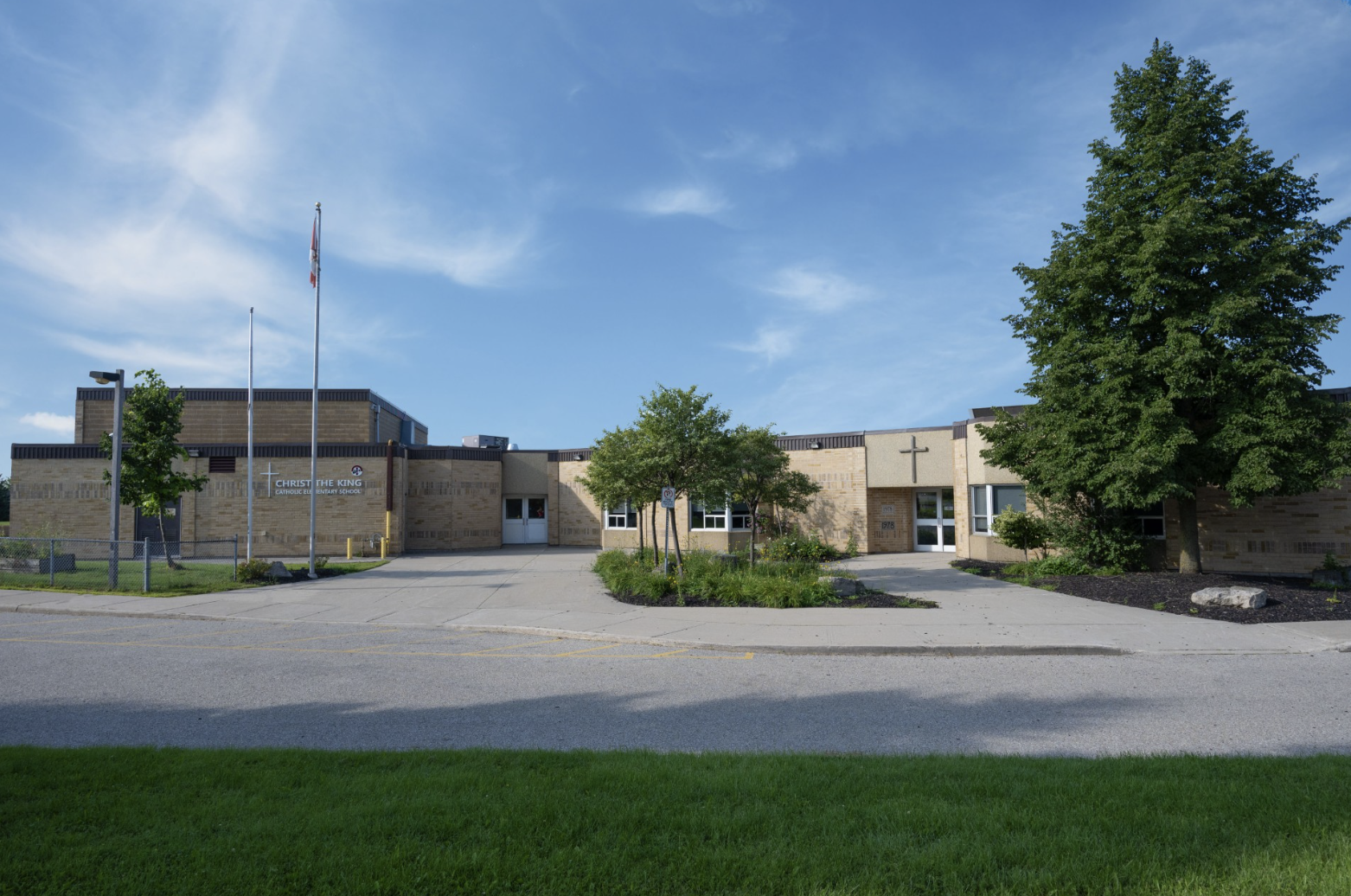
External validation is a powerful driver of organizational momentum. Christ the King Elementary School in Cambridge recently garnered the BOMA CREST Greenhouse Gas Emissions Reduction Award specifically for the K-12 category. This school serves as a flagship for what is possible when technical upgrades meet operational discipline.
The interventions at Christ the King included:
A complete BAS overhaul to replace legacy controllers.
HVAC system commissioning as part of BAS overhaul.
Optimization of scheduling to account for "community use" (evening/weekend programming).
Full LED lighting retrofits to lower the base electrical load.
Strategic Takeaway: The success of this project was not just about hardware. It was rooted in the relationship between the energy manager and the maintenance operators. By building trust and aligning goals, the board ensures that energy-saving measures are embraced by those on the front lines, rather than bypassed for convenience.
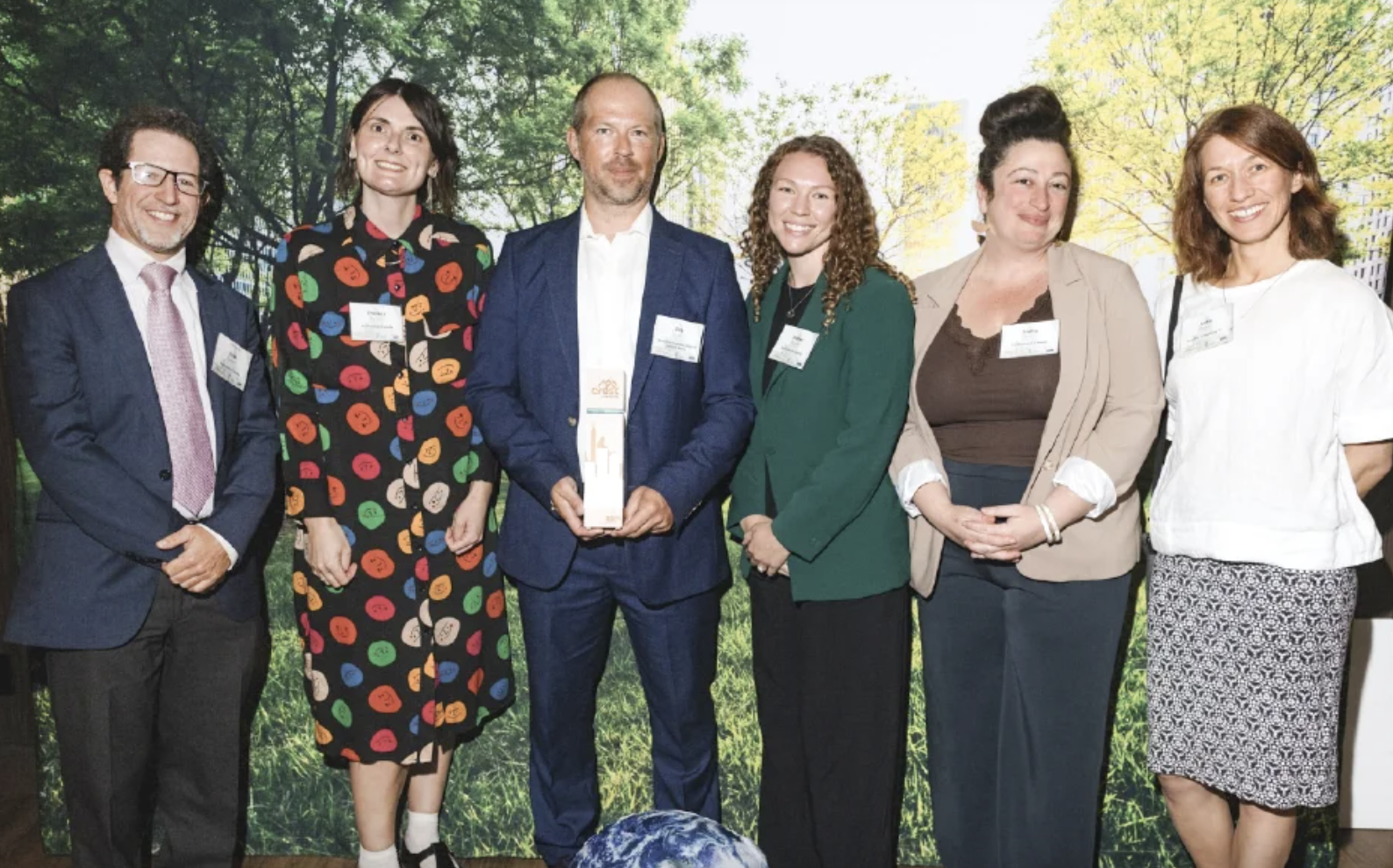
Zeb Foss of WCDSB receives the inaugural CREST Award alongside the EcoSchools Canada team, award sponsors, and Katia Osokine from the Climate Challenge Network (far right).
Climate Action Micro Grant Case Study:
The Waterloo Catholic District School Board used Climate Action Microgrant funding to install real-time energy monitoring, aiming to reduce energy use, carbon and costs by 5-10%. Tracking energy helps identify waste, improve efficiency, and demonstrate sustainability benefits, with long-term savings and environmental impact. The project supports broader efforts to promote energy efficiency in schools. Funding for the 2024 Climate Action Microgrant was generously provided by TD. For more information click here.
Internal Synergy: The Multi-Stakeholder Collaboration Model
To achieve board-wide sustainability, WCDSB has broken down departmental silos through a diverse sustainability committee. This ensures the mission is shared across the entire organization, from the boardroom to the boiler room.
The committee includes:
Superintendents and Executive Administration.
Maintenance and Custodial Operations staff.
School Administrators and Teachers.
Experiential Learning advocates.
Purchasing and IT Services staff.
This internal infrastructure is supported by a culture of "not saying no" to projects with clear ROI. This executive support led to the expansion of the "department of one" with the hiring of a dedicated BAS Technician in April of last year. This role is pivotal for maintaining the precision required to meet the board's aggressive carbon emissions reduction targets.
The Ecosystem of Partnership: Community and Student Impact
WCDSB acts as a central hub in a regional ecosystem of sustainability, using public-private partnerships to extend its reach.
Sustainable Waterloo Region: Working to catalyze transformation to sustainable systems of energy, mobility, and buildings/construction to build a cleaner, more diverse economy and a just, equitable community
EcoSchools Canada: Offering a certification program for elementary through secondary schools, nurturing environmental learning and climate action.
REEP Green Solutions: Working alongside the community and partners through initiatives like ClimateActionWR and the Community Canopy Project to reduce greenhouse gas emissions.
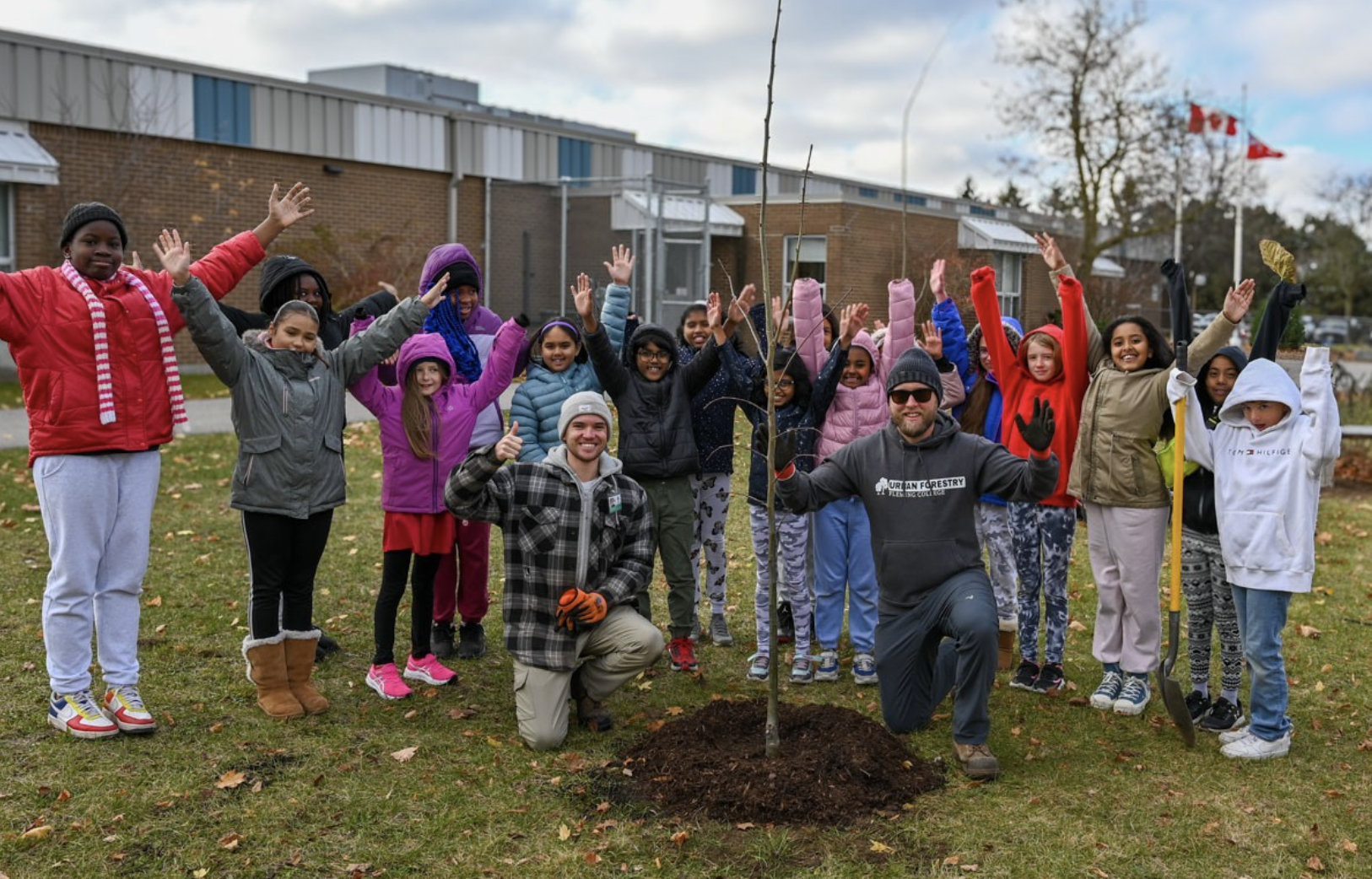
ReForest Woolwich: Dedicated to doubling Woolwich Township's urban tree canopy cover from roughly 16% to 32% through projects like the upcoming St. Teresa of Avila Catholic Elementary School tree planting.
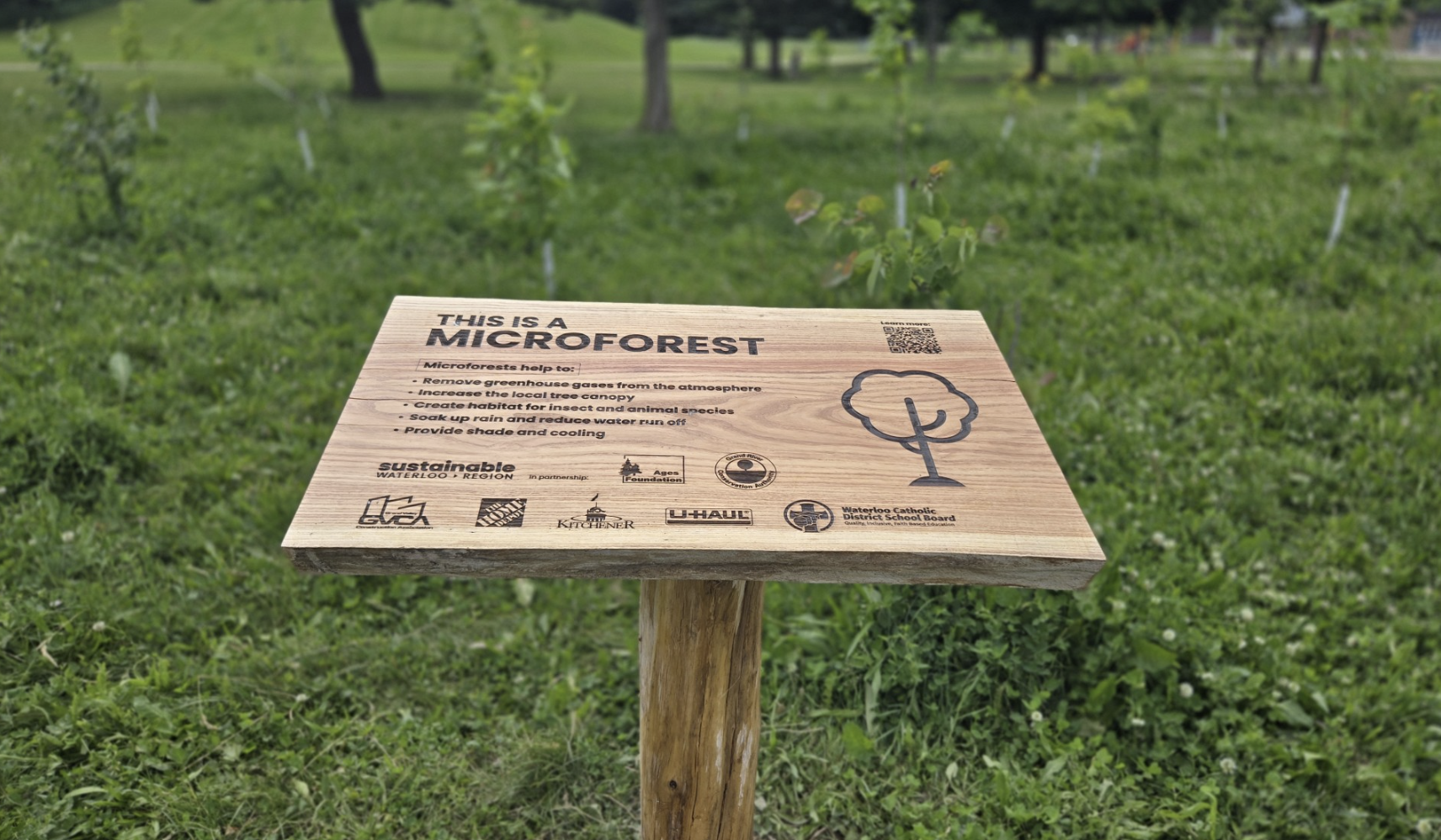
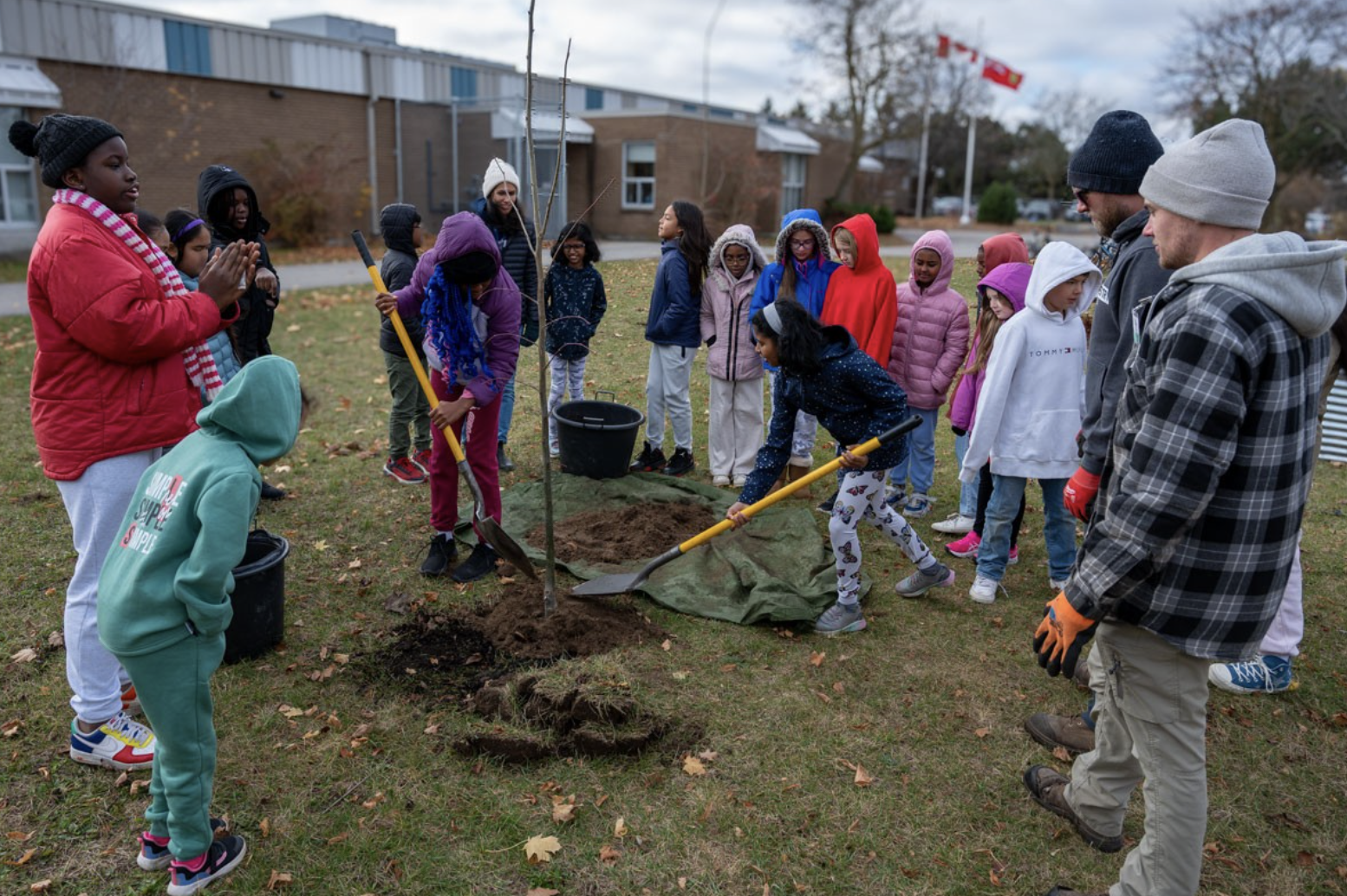
"October and November are completely filled with tree plantings. Once schools saw the educational benefits, interest spread like wildfire—making this our heaviest planting season to date”, Zeb Foss
These projects provide "Experiential Learning" that goes beyond textbooks. Students get their "hands dirty" digging holes and planting trees, learning about species resilience and storm water management first-hand. Students also interact with real-time data via the "EcoZone" platform, turning building performance into a curriculum asset.
Conclusion: A Blueprint for the Future
The Waterloo Catholic District School Board’s journey is a blueprint for institutional sustainability in an era of fiscal constraint. By leveraging utility expertise, creating a self-sustaining financial model through the Green Revolving Fund, and fostering a deep "culture of conservation," WCDSB has moved from incremental changes to award-winning results.
Their success proves that reaching net-zero is not just a matter of installing the right technology; it is about building the right partnerships and the right internal culture. As WCDSB continues to hit its targets, it remains committed to providing comfortable, high-performing, and sustainable learning environments for the next generation of climate leaders.