
Ontario Electricity Prices Are Not Just Rising. They're Becoming Unpredictable
Written by Josh Lewis, Chief Technical Engineer, NERVA Energy.
Why grid resilience and energy conservation are now a leadership priority for large building owners.
For decades, electricity in Ontario behaved like a predictable utility expense. Owners and operators could budget using historical averages, assume relatively stable pricing, and treat electricity as a manageable line item within annual operating costs.
That era is ending.

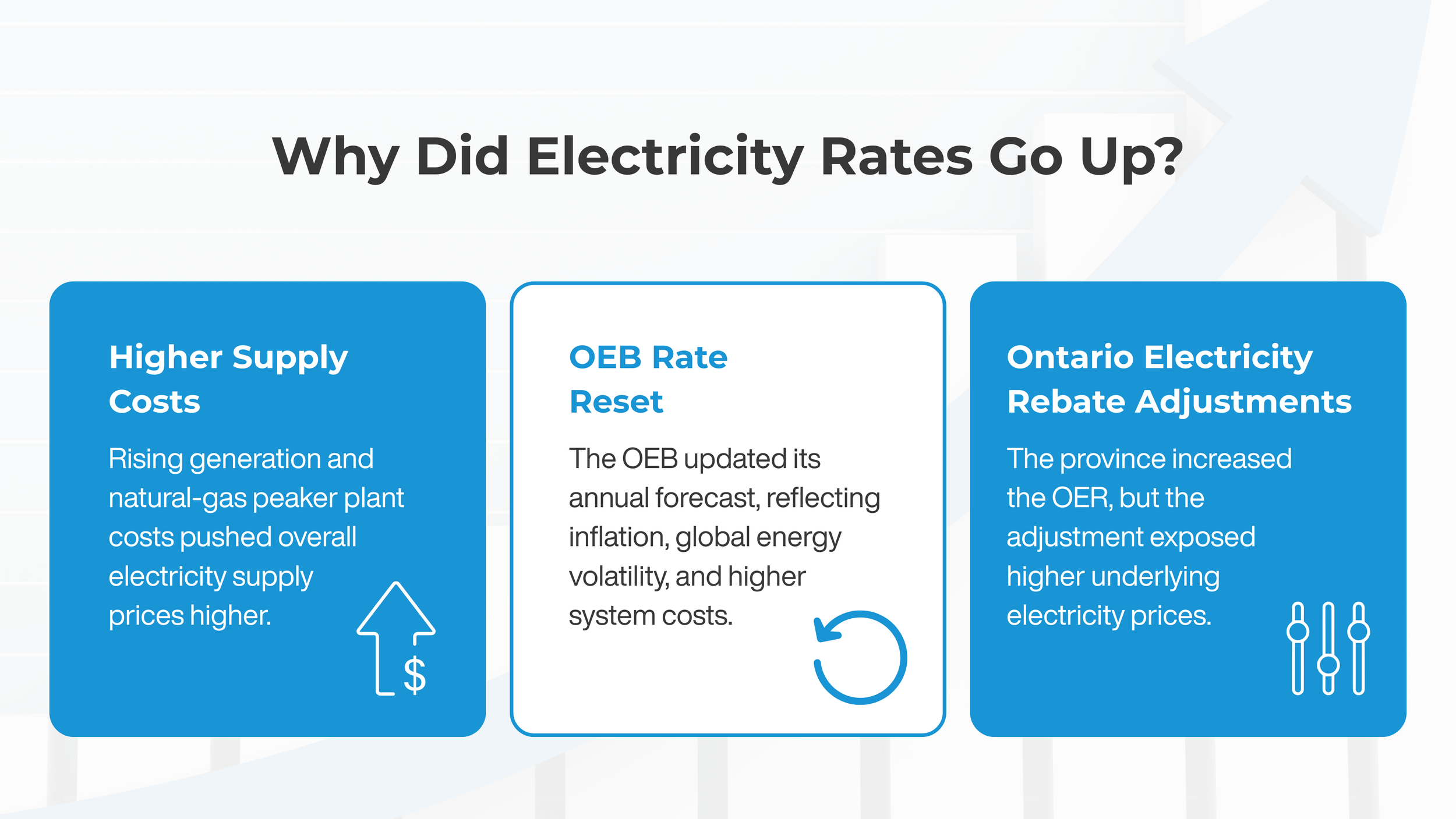
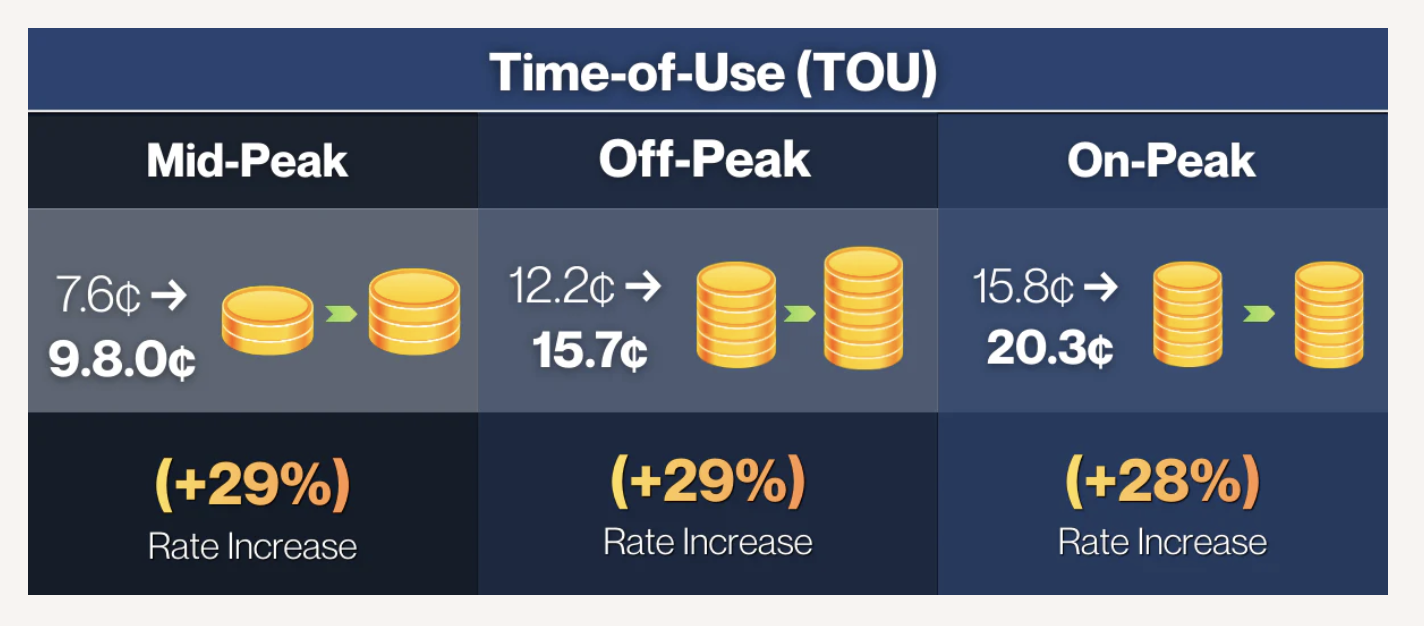
Ontario's electricity market is entering a period where scarcity pricing and volatility are no longer exceptional events. They are becoming a recurring feature of the system, driven by rising demand, constrained supply, and market changes that expose customers to the real hourly cost of electricity.
On January 28, Ontario's day-ahead electricity market cleared at average prices above $480/MWh, with peak hours exceeding $640/MWh. The weighted average price for the month came in over $120/MWh, more than 50% higher than January 2025.
For building owners, the impact is immediate and material. A customer using roughly 10 million kWh per year would see annual electricity costs shift from approximately $322,000 in 2024 to over $1 million if January pricing conditions were sustained.
But the real story is not one expensive month.
The real story is what that month represents: Ontario's grid is tightening, and electricity is increasingly behaving like a volatile operating input cost.

What's driving Ontario's electricity volatility
Several structural forces are occurring at the same time, creating a new pricing reality:
Demand is rising. Electrification is accelerating across Ontario, with load growth driven by industrial expansion, data centres, electrified heating, and transportation.
Baseload supply is constrained. Ontario is entering the largest nuclear refurbishment cycle it has ever faced, including the upcoming Pickering outage in 2026. This reduces available baseload generation during already tightening conditions.
Natural gas is setting the marginal price more often. That means electricity prices are increasingly sensitive to gas market volatility, cold weather, and global supply conditions.
Market renewal has surfaced costs that used to be "hidden." Congestion management, line losses, and real-time balancing are increasingly visible in hourly market pricing rather than being averaged out. Volatility is no longer buried. It's showing up directly.
IESO forecasting continues to show tightening supply-demand conditions in both summer and winter periods over the next several years. Ontario is returning to a dual-peaking system, where both heating and cooling demand create stress on the grid.
At the same time, imports are less dependable. Quebec, New York, and other interconnected markets are facing similar constraints, limiting the ability to rely on low-cost imports during peak periods.
In practical terms, this means scarcity pricing is no longer an exception. It is becoming part of the normal operating environment.
Why this matters to owners and operators
Electricity volatility is no longer a facilities-level issue. It is now a leadership issue, affecting budgeting, operating margins, and risk.
For owners and operators of large buildings, the implications are clear:
1) Electricity becomes an operating risk.
Traditional budgeting assumptions based on historical averages are no longer reliable planning references. The variance risk is increasing, and it directly affects NOI.

2) Timing matters more than ever.
When electricity is consumed now plays a much larger role in cost outcomes, particularly during winter peaks and system-constrained hours. This creates exposure for buildings with inflexible or wasteful load profiles.

3) Grid resilience becomes financial resilience.
A tightening grid increases the probability of constrained-hour pricing, system events, and emergency operating conditions. Owners need buildings that can operate efficiently and adaptively, not just buildings that consume less annually.

The most controllable response:
energy conservation
Owners cannot control market pricing, nuclear outage schedules, global gas volatility, or grid congestion.
But owners can control building demand.
This is why energy conservation should now be priority #1 in Ontario portfolios. Not as an ESG initiative, and not as a discretionary capital project, but as a controllable operating strategy.
Conservation reduces exposure in every hour, including the most expensive ones. It improves forecasting confidence. It protects operating performance. And when implemented properly, it can be achieved without compromising comfort.
Procurement strategies and hedging can help manage price uncertainty, but they do not change the underlying load behaviour of a building. Conservation does.

What owners should do now
In today's environment, passive electricity management carries materially more risk than it did in the past. Owners should take four practical steps:
1) Understand hourly exposure.
Know your load profile, peak behaviour, and the hours where exposure is highest.
2) Identify always-on waste.
Many buildings carry significant consumption that is system-driven, not tenant-driven, often due to ventilation losses, make-up air inefficiencies, heating/cooling overlap, and poor scheduling or control strategies.
3) Prioritize load optimization, not just annual kWh.
Reducing consumption is important, but optimizing when and how electricity is used is increasingly critical in a volatile hourly market.
4) Align leadership on energy risk.
Electricity volatility now affects budgeting and operating margins. Senior leadership should be aligned on risk tolerance, exposure thresholds, and a multi-year conservation strategy.

The bottom line
Ontario's electricity market is changing, and grid conditions are tightening. The question for owners is no longer simply how to reduce utility bills.
It is how to reduce exposure to volatility while protecting comfort, operations, and asset performance.
Energy conservation is the most controllable answer, and in today's economic landscape, controllable cost reduction is a competitive advantage.
About NERVA Energy
NERVA Energy is a distinguished multidisciplinary engineering firm, renowned for its cutting-edge energy performance solutions. With an elite team composed of seasoned energy engineers, M&E engineers, and seasoned in-house mechanical technicians, NERVA is steadfast in its commitment to delivering turn-key solutions. These solutions not only amplify building energy efficiency but are also backed by a steadfast financial performance guarantee.
To learn more about the company and their services, visit: